Chenmu Zhang
Postdoctoral Researcher in Materials Science, Rice University
I build autonomous AI agents for computational materials science.
My work connects scientific computing, agent evaluation, and materials discovery.
MatClaw
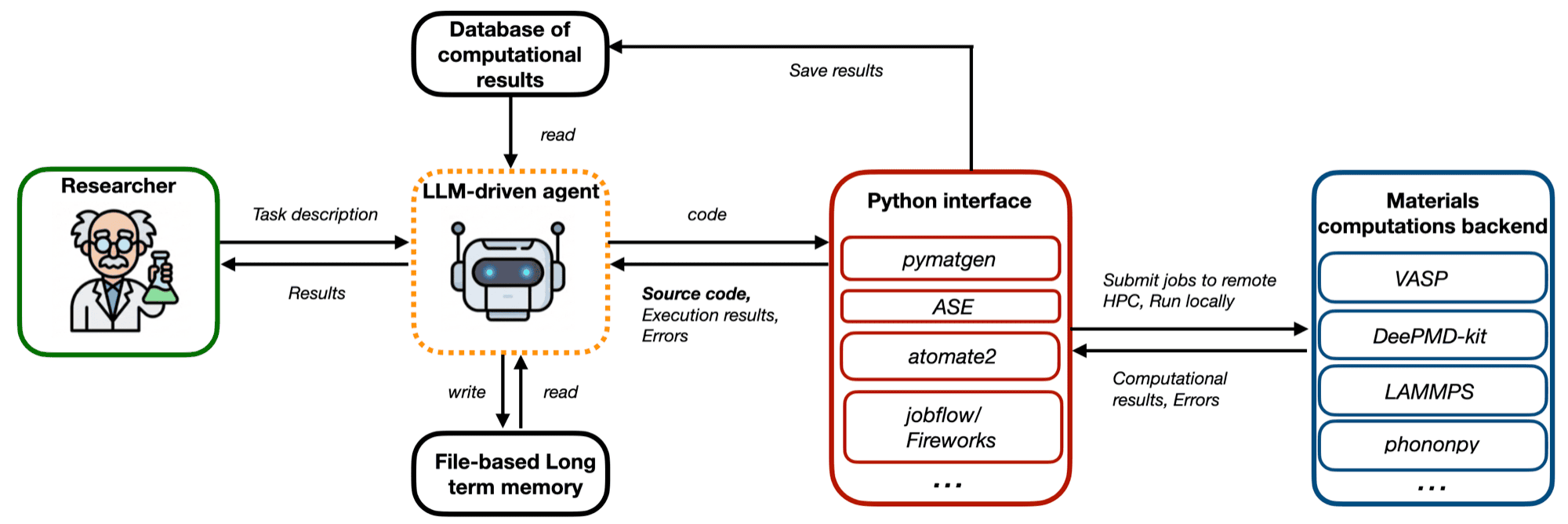
An autonomous agent that writes code, runs simulations, and analyzes materials.
Given a task in plain language, MatClaw writes and runs Python against domain libraries and submits jobs to supercomputers. It works in a persistent Python session: loaded models and running jobs stay available between steps, and its tools are the code it writes. It is the agent behind the benchmark and Cu–In–Se study below.
 View full-size figure ↗
CompMat-Bench
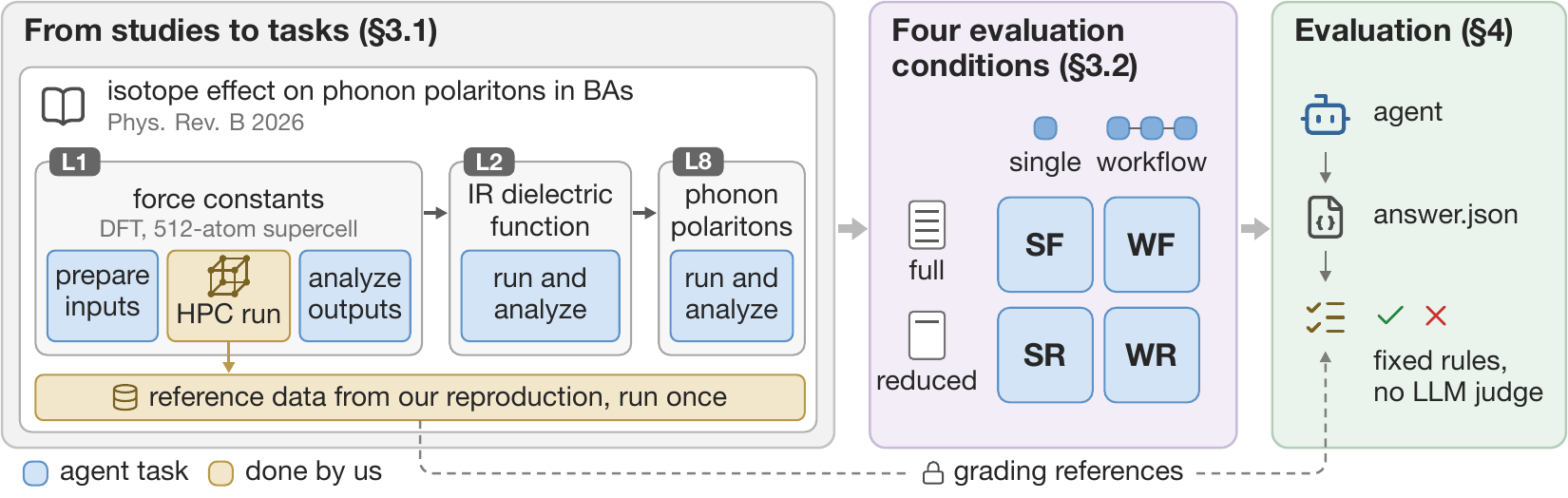
Testing AI agents on the steps of real materials research.
A benchmark of 94 tasks from 15 published studies, with expensive single-step simulations run in advance and answers graded by fixed rules, without an LLM judge. With full guidance, agents pass 66–90% of single research steps. Long workflows with reduced guidance are harder; most failures are scientific errors.
 View full-size figure ↗
Materials discovery in Cu–In–Se
Human-defined scientific tasks, carried out by an autonomous agent.
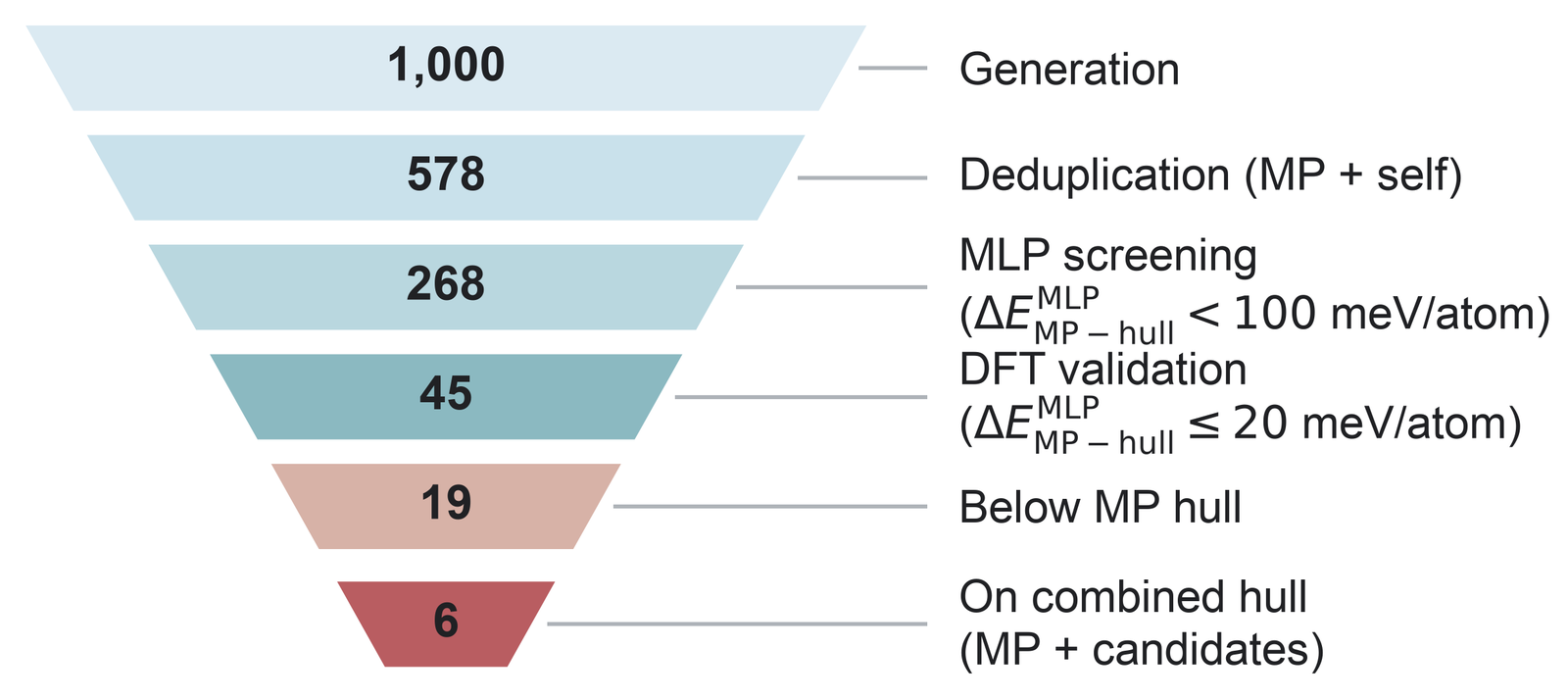
Applied to the system of the solar absorber CuInSe2, the agent connects MatterGen, machine-learning potentials, VASP, and Phonopy in one workflow. From a single request, it completed the screening shown here with no further human input.
The authors reviewed the scientific validity of the outputs and extended checks where the automated runs were incomplete.
 View full-size figure ↗
Autonomous research for band-gap prediction
An LLM research loop improves an expert-designed crystal graph network.
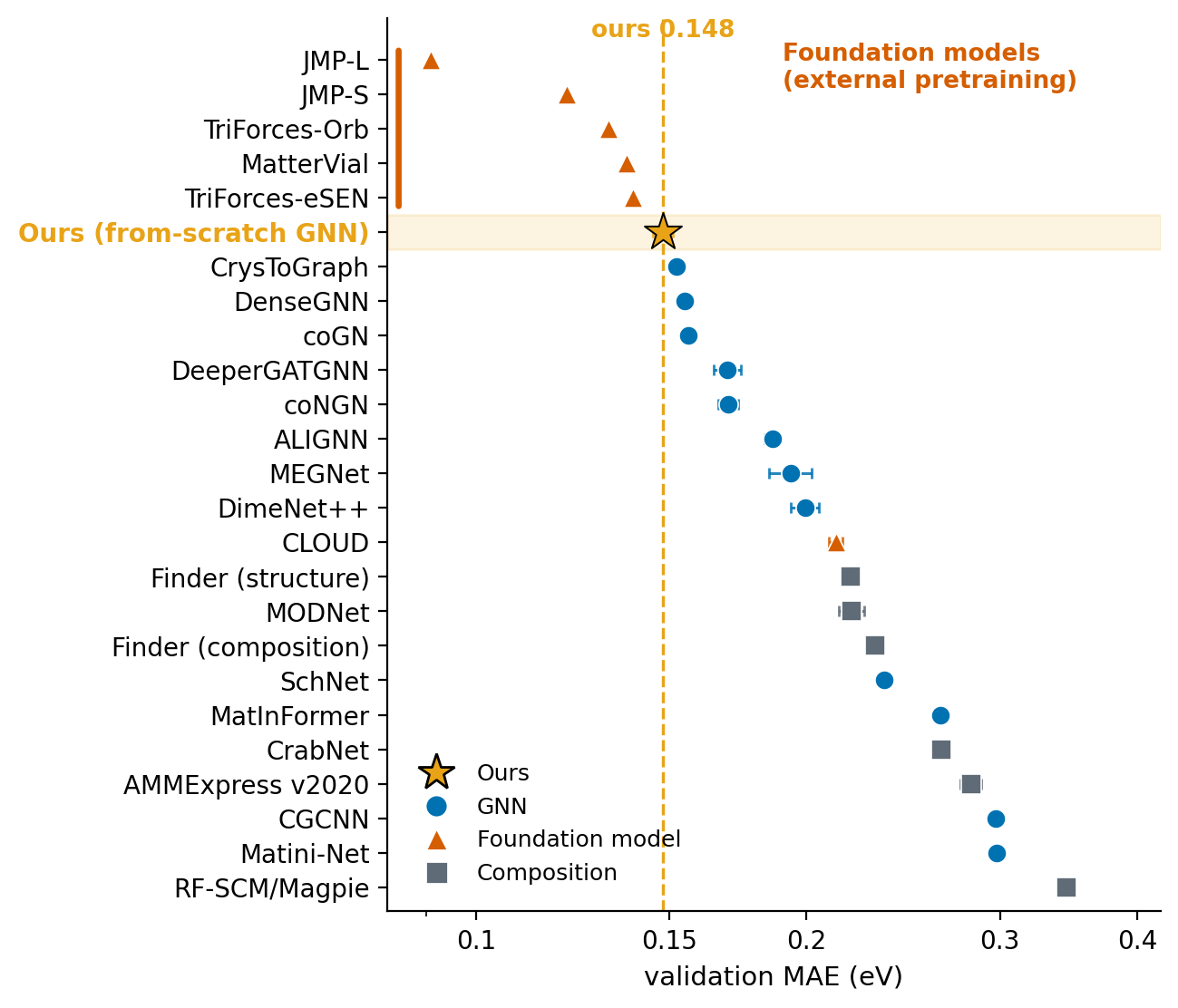
The agent repeatedly edits and trains a model on the MatBench band-gap benchmark of over 100,000 crystals. It achieved 0.148 eV MAE, ahead of all 17 expert-designed band-gap models trained on the benchmark.
This is the most accurate model trained without external pretraining in that comparison. Foundation models using external pretraining remain ahead. Alongside this result, I study the limitations of autonomous research loops and how to overcome them.
 View full-size figure ↗
Previous research
Electron transport from first principles
Before turning to AI, I studied how electrons scatter in 2D semiconductors and nanoscale metals: phonons, surfaces, defects, and dielectric environments.
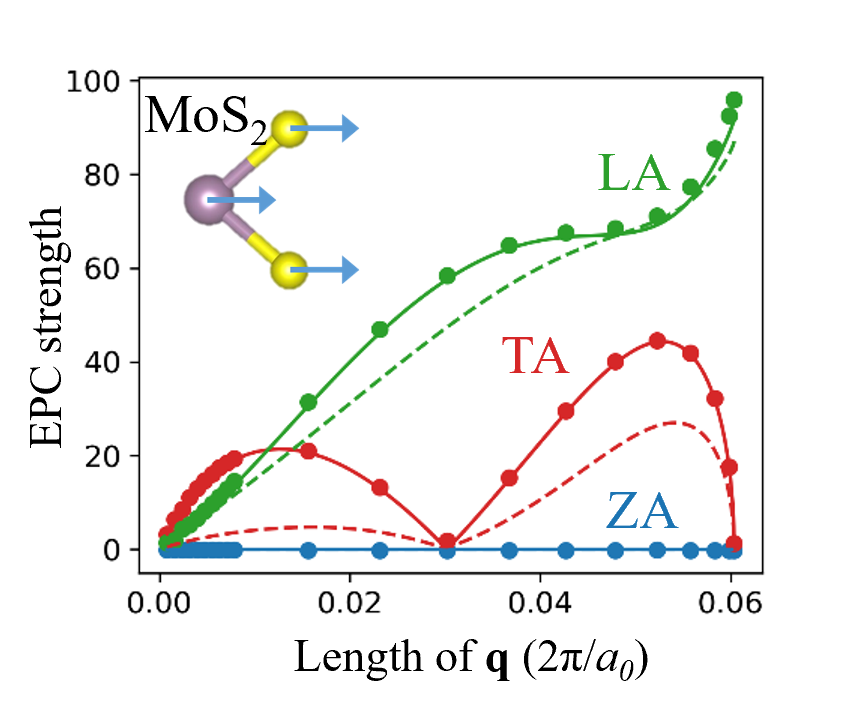
Electron–phonon
Quadrupole scattering and high-mobility 2D semiconductors.
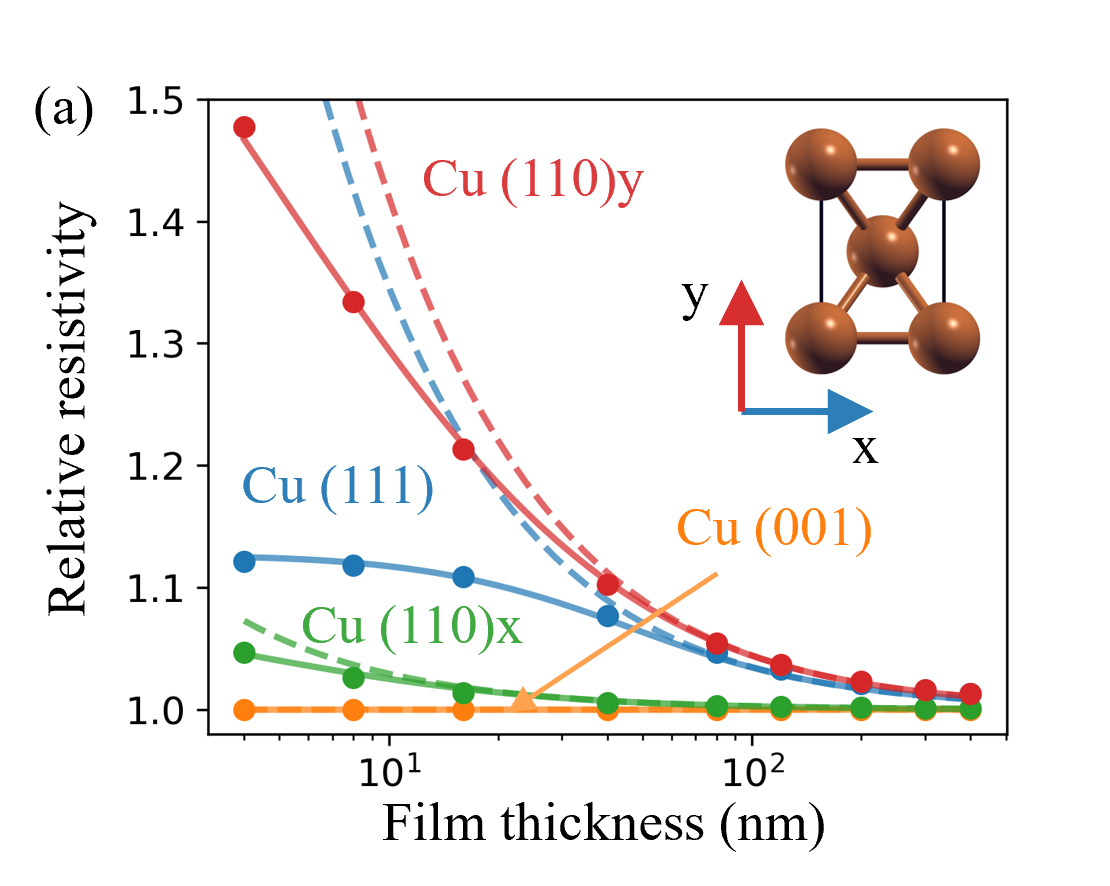
Electron–boundary
Surface scattering in nanoscale metals and graphene–Cu.
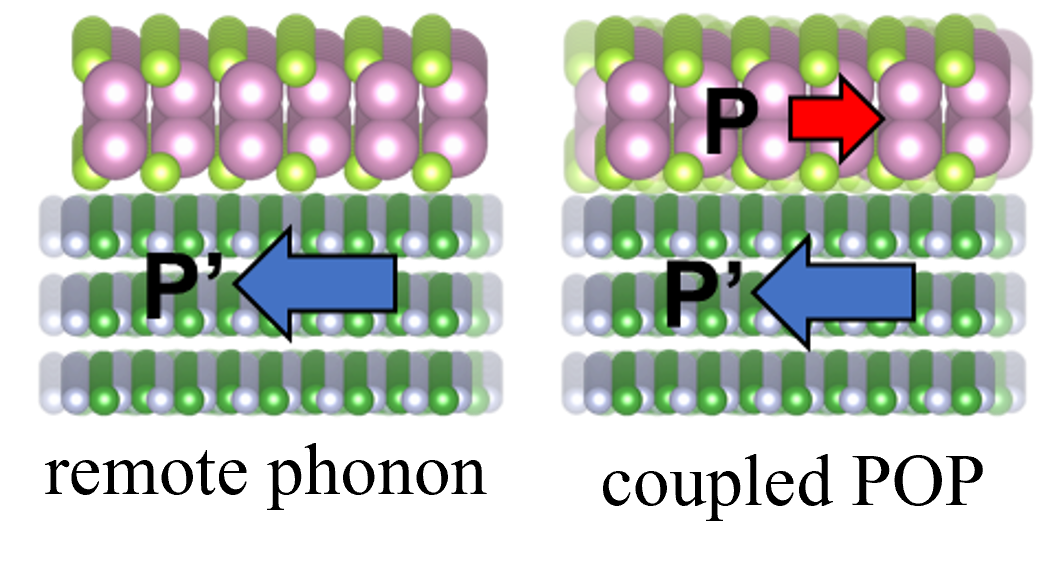
Electron–environment
Dielectric screening in van der Waals heterostructures.
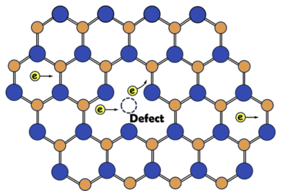
Electron–defect
Defect-limited mobility in transition metal dichalcogenides.